
Client Story | Reviving a Classic: Recreating a Minton, Hollins & Co Gothic Encaustic Tile
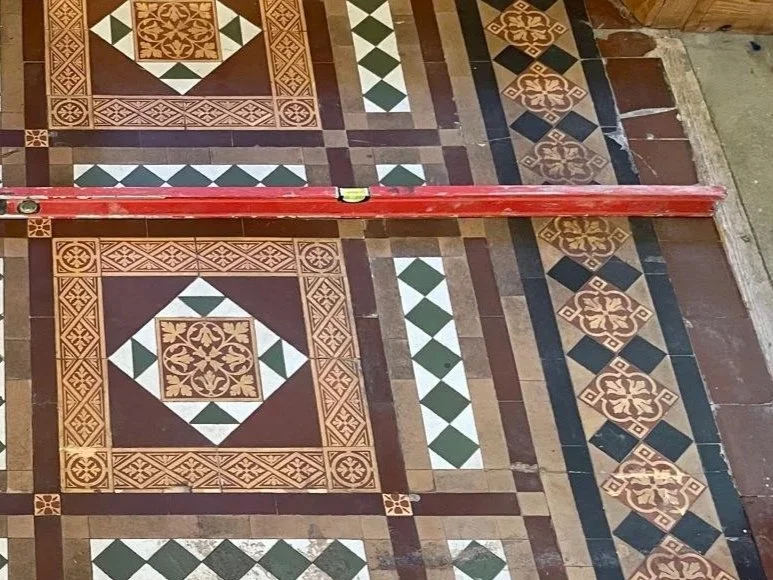
Some commissions take me into the heart of British ceramic history and this project was one of those special journeys. A client approached me with a request to recreate an original Minton, Hollins & Co encaustic tile, a design that had been part of their period property for generations. One tile had cracked and replacing it with a modern printed imitation simply wasn’t an option.
They wanted authenticity. Craftsmanship. The real thing.
And that meant returning to the traditional methods that defined the original tile.
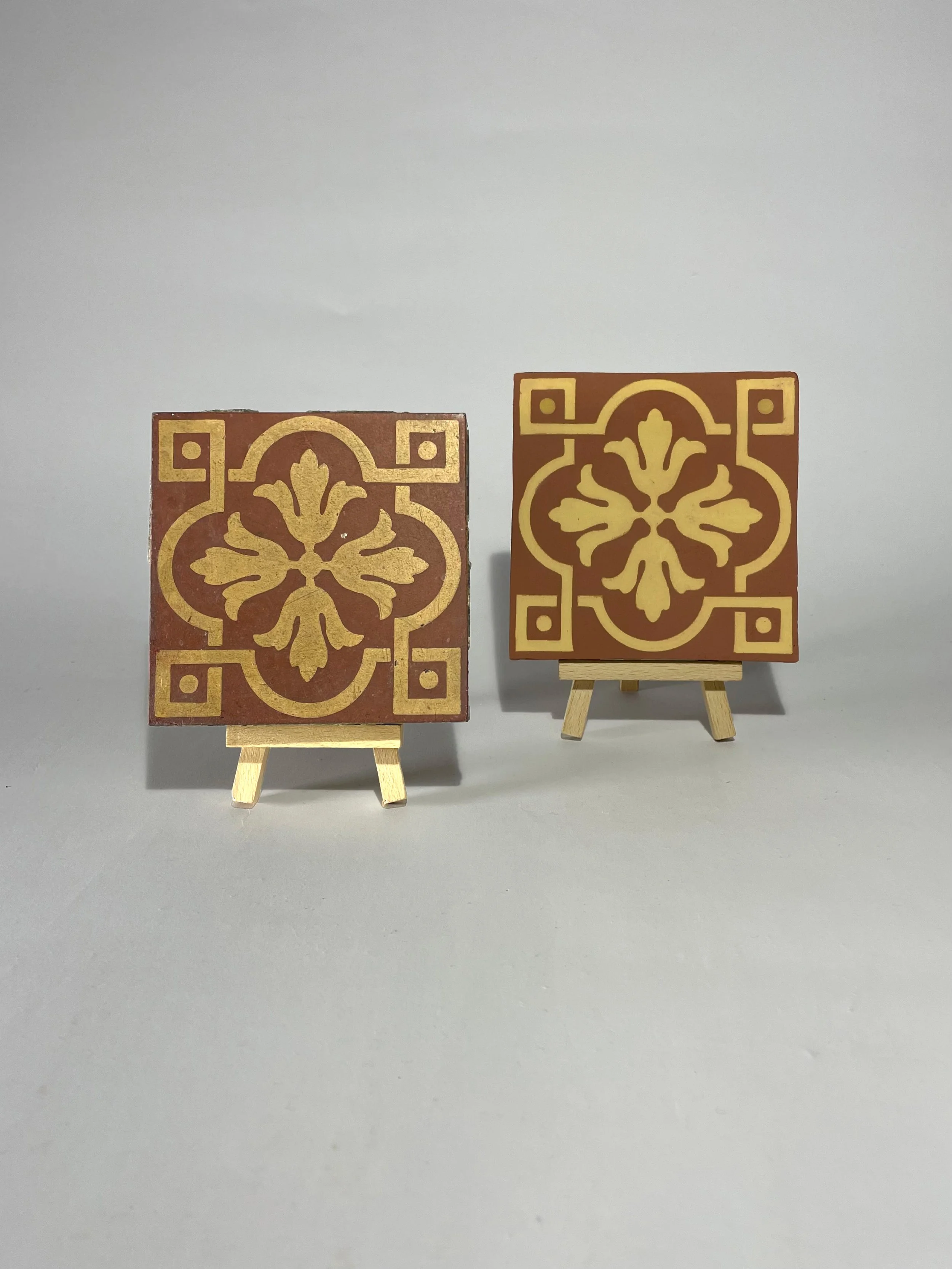
A side by side comparison - Minton, Hollins & Co encaustic floor tiles - old and new
A Gothic Design in Red and Buff
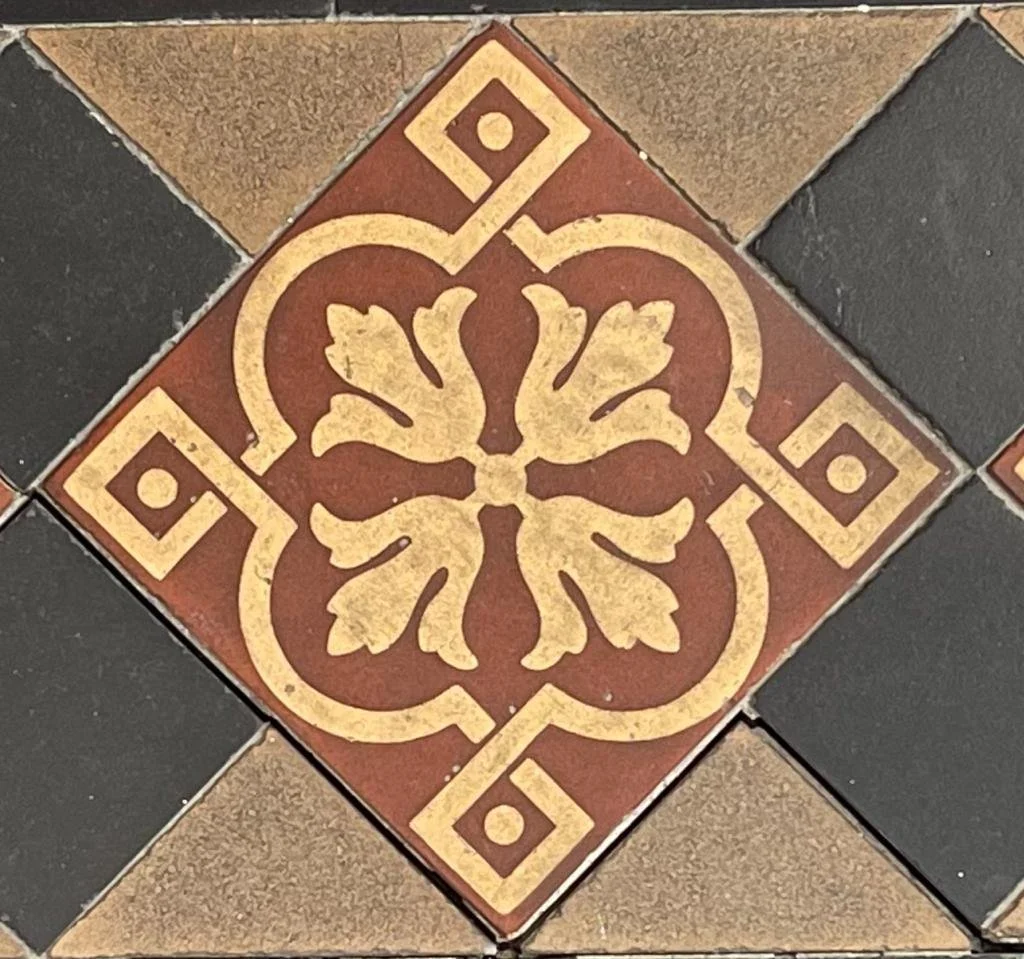
The original tile featured a striking Gothic pattern — that classic interplay of geometry and ornament that Minton & Hollins perfected in the late 19th century. Its colours were unmistakably period-correct:
Red clay body
Buff-coloured inlay forming the intricate motif
Reproducing this tile wasn’t just a matter of copying an image. True encaustic tiles are created by inlaying coloured clay into a contrasting body — not by glazing a surface. To match the original, the craftsmanship had to be just as honest and tactile as it was 150 years ago.
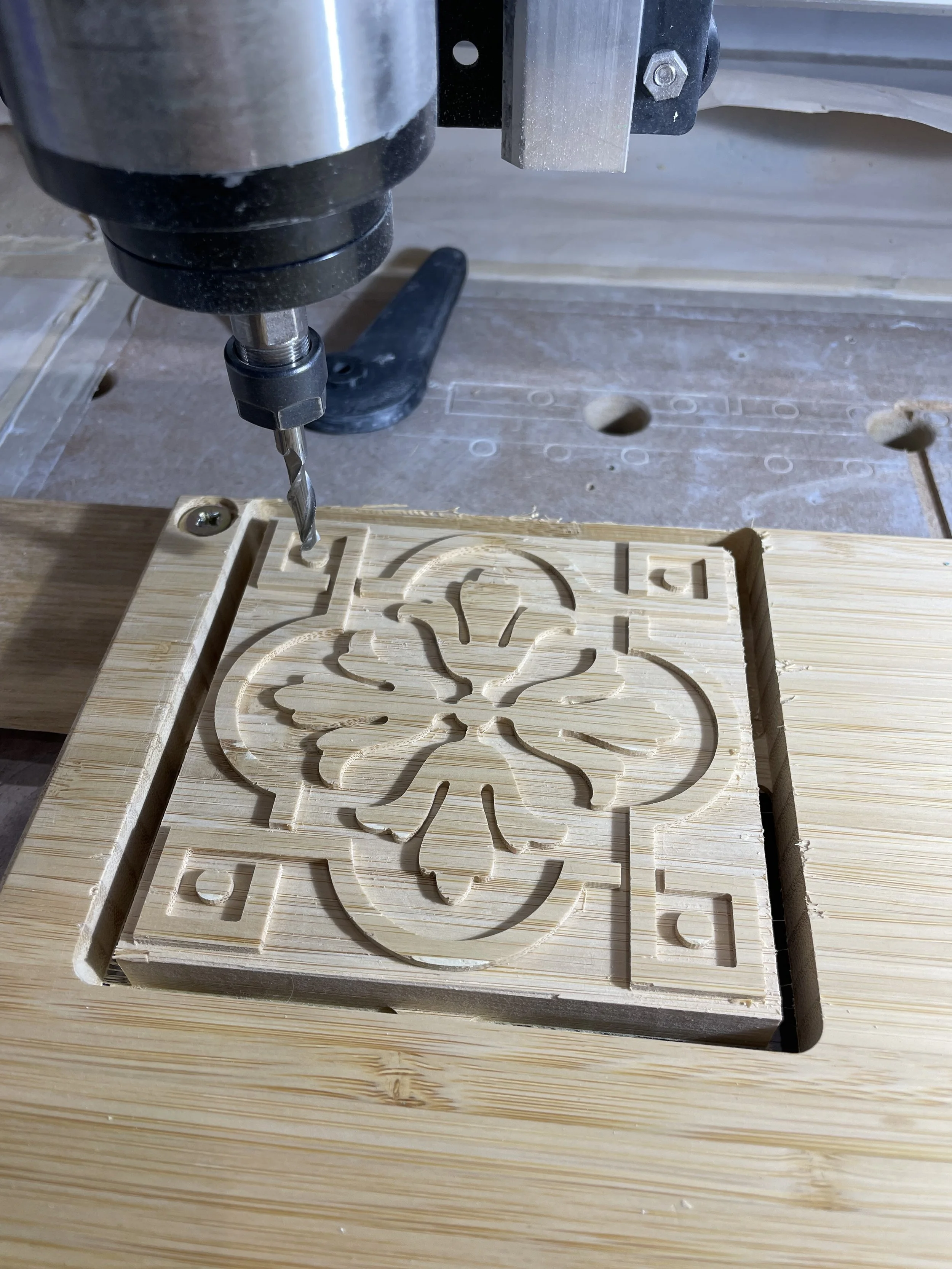
Crafting the Replica: A Wooden Stamp Instead of a Mould
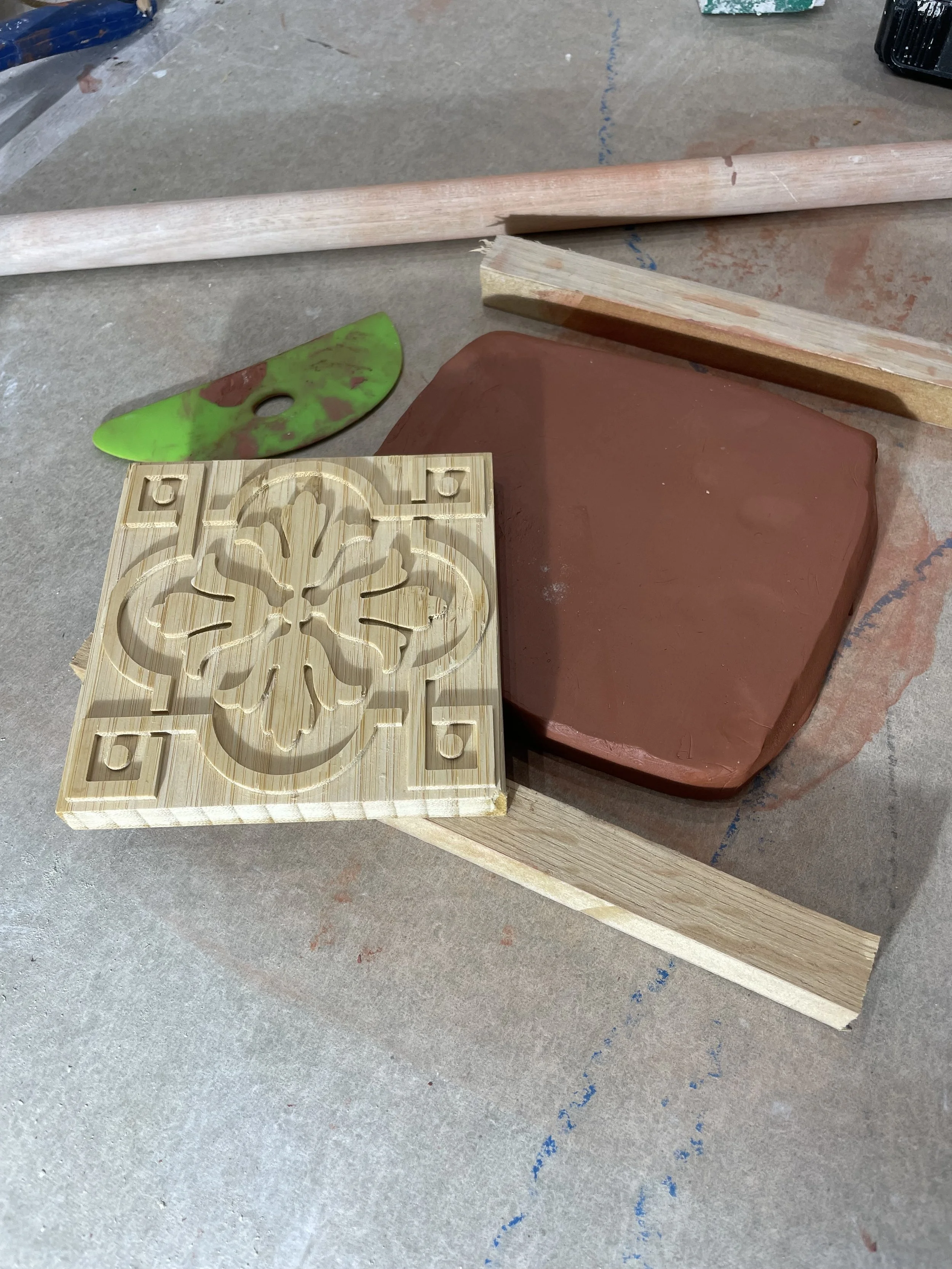
The first Victorian encaustic tiles were formed using plaster moulds that pressed the pattern into the clay before filling the recesses with inlaid colour but for this commission, I created a CNC-carved wooden stamp that matched the original motif line by line.
Why wooden?
Because it reproduces the characteristic of early stamped encaustic work. It allows the clay to respond naturally, leaving tiny variations that give the tile its authenticity.
The Process
Studying the original tile, to capture the proportions, line depth, and geometry.
Carving a wooden stamp, that mirrored the original Gothic motif.
Pressing the design into red clay, allowing the stamp to form the design.
Hand-inlaying the buff clay slip, Liquid clay is inlaid into the recessed pattern.
Smoothing, refining and fettling, scraping the surface back to reveal the clean contrast of red and buff.
Drying and firing, the tile to Victorian-appropriate finish.
The result: a tile that doesn’t just look like the original — it belongs with it.
A Piece of History, Reborn
When the client fitted the tile into place, it blended perfectly among the original companions.
Not newer. Not older.
Just right.
This is the magic of true encaustic craftsmanship: the ability to bring historical spaces back to life with honesty, clay, and patience. No shortcuts. No printing. No fakery.
Just heritage, preserved.
Commissioning Your Own Historical Reproduction
Whether you’re restoring a Victorian hallway, renovating a heritage property, or simply want an authentic encaustic tile that honours traditional technique, I’d be delighted to help.
Every reproduction is made using the same methods that define the originals — hand-applied inlays, an artist’s pattern and craftsman’s tools that leave a genuine handmade signature; Just updated for today!
Reproduction Minton Hollins Encaustic Floor Tile
Step back in time with our expertly crafted reproduction Minton, Hollins & Co encaustic floor tile, a flawless homage to the iconic Victorian designs that once adorned historic British homes and institutions. Each tile is handmade in Edinburgh, utilising traditional methods and ensuring authenticity and quality.
Design: Classic Minton Hollins pattern, featuring intricate geometric motifs in rich, lasting colours.
Materials: High-quality porcelain clays and pigments, fired to perfection for durability and vibrancy.
Dimensions: 4” x 4” (approx. 100mm x 100mm).
Finish: Matte surface with the distinctive inlaid encaustic pattern, perfect for heritage restorations or adding vintage charm.
Sustainability: Crafted with eco-conscious processes and natural materials for a highly sustainable product.
Usage: Ideal for floors, walls, hearths – indoors or covered outdoor spaces.
Limited Edition: Each tile is part of a limited run, making yours a unique piece of heritage craft.
Commission a bespoke order for larger projects or mix and match to curate your own gallery at home. Collect all our heritage tile reproductions and bring a splash of history and colour to your home with Welby & Wright.
Get your hands on a piece of architectural history.